
Dumpster rental is usually the better choice for large-scale projects where you need time to load waste yourself. Junk removal is usually better for smaller projects where you want a crew to remove items for you. The right call depends on project size, waste volume, budget, how much labor you’re willing to do, and what needs to happen with disposal.
Quick Summary
- Dumpster rental = you load a container over several days; better for large volumes and renovation/construction debris.
- Junk removal = a crew loads and hauls for you the same day; better for small volumes and heavy items you can’t lift.
- Cost usually favors dumpster rental for big jobs and junk removal for small ones.
What Is the Difference Between Dumpster Rental and Junk Removal?
Dumpster rental provides a container that stays at your property for a set period, giving you full control over when and how you load it. Junk removal sends a crew that shows up, does the lifting, and hauls everything away in one visit, usually the same day. The core trade-off is time and labor versus cost and convenience: dumpster rental trades speed for flexibility and lower cost on volume, while junk removal trades a higher per-item cost for zero physical effort.
How Does Dumpster Rental Work?
The process is straightforward but has a few moving parts worth knowing before you book:
1- Delivery: A roll-off container is dropped at your driveway or curb on a scheduled date.
2- Loading: You load debris at your own pace during the rental window — this is the main difference from junk removal.
3- Rental period: Most companies offer 7–14 day windows, with extensions available for a daily fee.
4- Pickup and disposal: The company picks up the full container and handles disposal, recycling, or landfill sorting.
Most providers include disposal in the base price up to a certain weight limit. Going over that limit is where unexpected costs show up, so it’s worth confirming the included tonnage before delivery, not after pickup.
How Does Junk Removal Work?
Junk removal is built around speed and zero physical effort on your part:
1- You schedule an appointment, often with a same-day or next-day window.
2- A two-to-three-person crew arrives and does a quick on-site estimate.
3- The crew loads, straps, and hauls items directly from your home — no lifting on your end.
4- It’s the better fit for small-scale cleanups: a few pieces of furniture, an appliance, or a single-room declutter.
The trade-off is that pricing scales with volume and labor, so it gets less cost-effective as the job gets bigger — which is the tipping point that decides which service actually makes sense.
Dumpster Rental vs Junk Removal: Key Differences
| Factor | Dumpster Rental | Junk Removal |
| Service type | Rental container | Full-service hauling |
| Loading responsibility | You load the waste | Crew removes items |
| Best for | Large projects | Small cleanouts |
| Rental time | Multiple days | Usually same-day |
| Waste volume | Large amounts | Smaller amounts |
| Cost control | More predictable for big jobs | Depends on labor and volume |
| Physical effort | Required (unless you hire loaders separately) | None |
This table answers the two questions people ask side by side, the difference between dumpster rental and junk removal and whether to go with dumpster rental or junk removal, without needing to read the full breakdown below.
Is Renting a Dumpster Cheaper Than Junk Removal?
For large cleanup projects, renting a dumpster is usually more affordable because you’re not paying for hourly labor. Instead, you’re paying a flat rate for the container and disposal. Junk removal can come out cheaper for small loads, since you only pay for what’s actually removed rather than a container you might not fill.
The break-even point is roughly this: if a job would take a two-person crew more than about 90 minutes to clear by hand, a dumpster rental usually wins on cost. Below that, junk removal’s flat per-load or per-item pricing tends to be cheaper than renting a container you’d only partially fill.
Dumpster Rental Cost Factors
- Dumpster size (10-yard through 40-yard) — bigger containers cost more but lower your per-yard price.
- Rental duration — most quotes assume 7–10 days; extensions add daily fees.
- Debris type — heavier materials like concrete or shingles often carry a separate rate due to weight limits.
- Location — delivery distance and local disposal/tipping fees affect price.
- Disposal fees — confirm whether landfill or recycling fees are bundled into the quote or billed separately.
Junk Removal Cost Factors
- Amount of junk — most companies price by truck-load percentage (quarter, half, full load).
- Labor involved — stairs, tight hallways, or disassembly required adds to the quote.
- Number of workers required — heavier or bulkier jobs need a larger crew, which raises cost.
- Disposal requirements — items requiring special handling (electronics, appliances with refrigerant) often carry an added fee.
When Should You Choose Dumpster Rental?
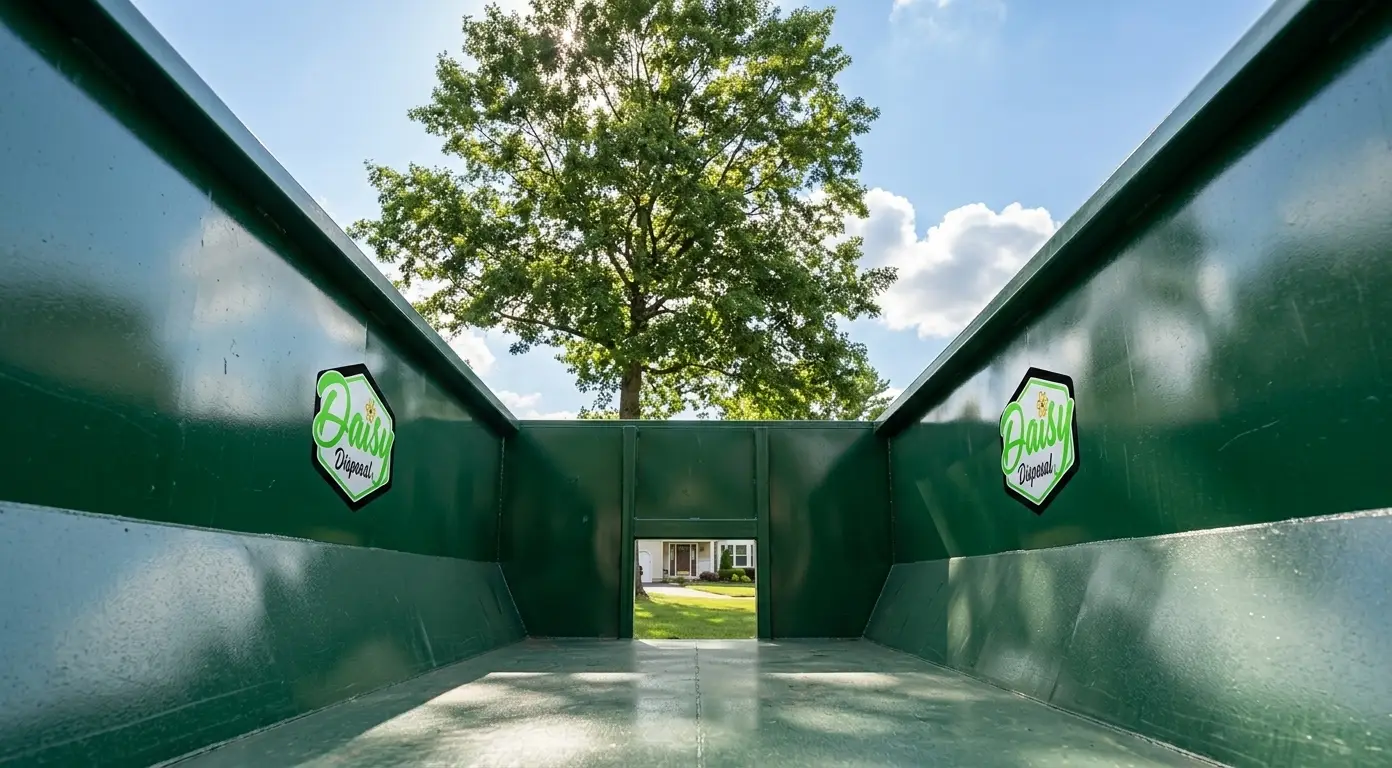
A dumpster rental is the better choice when you have a large volume of waste, need multiple days to work through a project, or are generating ongoing debris from renovation, construction, or demolition work.
Dumpster Rental Is Ideal For Home Cleanouts
1- Garage cleanouts
2- Basement cleanouts
3- Estate cleanouts
4- Moving cleanups
If you’re clearing out a full house rather than a single room, a dumpster rental for cleaning out a house or a house cleanout dumpster rental is almost always more cost-effective than paying a crew to make repeat trips.
Renovation Projects
Kitchen remodeling, bathroom renovations, and flooring replacement generate debris in waves over days or weeks rather than all at once, which is exactly the scenario a renovation dumpster rental is built for, since you can load it as work progresses instead of scheduling multiple pickups.
Construction and Demolition Waste
Drywall, wood, concrete, and roofing materials are heavy, sharp-edged, and generated continuously during active work. A construction debris dumpster rental lets crews toss materials directly as they work without staging a separate pickup.
When Should You Choose Junk Removal?
Junk removal is the better choice when you have a smaller amount of unwanted items and want professionals to handle the lifting, loading, and disposal without you touching a single item.
Junk Removal Works Best For
1- Old furniture removal
2- Appliance removal
3- Single-room cleanouts
4- Small household decluttering
5- Quick, one-time pickups
This is also the right call for anyone with physical limitations or health restrictions that make lifting heavy objects unsafe. The cost premium buys you the ability to avoid an injury, not just convenience.
Can You Rent a Dumpster for Junk Removal Projects?
Yes. Many homeowners use a dumpster for junk removal-style projects when they need more time, are dealing with larger volumes than a single truckload, or simply want to work at their own pace instead of scheduling a crew visit.
This approach fits particularly well for:
1- Moving preparation, where items accumulate over several days
2- Garage cleanouts with mixed debris types
3- Estate cleanouts involving a full property
4- Foreclosure cleanouts with unknown volume until you’re on-site
5- General property cleanup spanning more than one day
Dumpster rental for junk removal essentially blends both worlds, self-paced loading with dumpster-level capacity, for anyone whose “junk” load turns out to be bigger than expected once they start.
Common Mistakes When Choosing Between the Two
1- Underestimating volume: Renting a 10-yard dumpster for what turns out to be a 20-yard job means paying for a second container.
2- Ignoring weight limits: Concrete, dirt, and shingles are dense — filling a dumpster with these materials can hit the weight cap well before the container looks full.
3- Assuming junk removal handles everything: Some junk removal companies exclude hazardous materials, certain appliances, or construction debris — always confirm before booking.
4- Not checking permit requirements: Placing a dumpster on a public street (rather than a private driveway) may require a local permit — this is easy to miss until delivery day.
5- Booking based on price alone: The cheapest quote sometimes excludes disposal fees, overage charges, or delivery fees that show up later.
Risks, Limitations, and When to Call a Professional
Dumpster rentals carry weight-limits and permit risks that fall on you as the renter. Overloading a container or blocking a public right-of-way without a permit can trigger extra fees or fines. Junk removal carries less logistical risk but limits what you can dispose of, since crews typically won’t take hazardous waste, certain electronics, or items requiring special certified handling.
If a project involves hazardous materials, such as old paint, chemicals, asbestos-containing materials, or refrigerant-containing appliances, neither standard dumpster rental nor standard junk removal is the right fit on its own. That debris usually needs a certified hazardous waste handler, and it’s worth asking your provider directly whether they subcontract that piece or exclude it entirely.
How to Choose Between Dumpster Rental and Junk Removal
Choose dumpster rental if:
- You have several days of cleanup ahead of you
- You’re removing large amounts of debris
- You’re handling renovation or construction waste
- You want flexibility with loading on your own timeline
Choose junk removal if:
- You need immediate, same-day removal
- You have a limited amount of waste
- You don’t want to handle any loading yourself
- You’re working around physical limitations
This decision framework directly answers the question of choosing between dumpster rental and junk removal. If you’re still unsure after running through it, the size and timeline of your project are the two factors that matter most.
Why Choose Daisy Disposal for Dumpster Rental in South Jersey?
Daisy Disposal offers roll-off dumpster rental options built for both residential and commercial projects, including construction and demolition waste support. Flexible sizing and reliable pickup and disposal scheduling mean you’re not stuck waiting past your rental window or guessing on container size.
See also:
1- 10 yard dumpster rental
5- Commercial dumpster services
6- Demolition services
Frequently Asked Questions
Is dumpster rental cheaper than junk removal?
For large projects, yes — dumpster rental is typically cheaper because you avoid hourly labor costs. For small loads, junk removal can be cheaper since you only pay for what’s actually removed rather than a full container.
What is the difference between dumpster rental and junk removal?
Dumpster rental gives you a container to load yourself over several days. Junk removal sends a crew to load and haul items away, usually the same day. The difference comes down to who does the loading and how much time you have.
Does dumpster rental include disposal?
Most dumpster rental services include delivery, pickup, and disposal up to a set weight limit in the base price. Going over that limit typically triggers an overage fee, so confirming the included tonnage upfront avoids surprises.
How does dumpster rental work?
A container is delivered to your property, you load it at your own pace during the rental period (usually 7–14 days), and the company picks it up and handles disposal. Extensions are available if you need more time.
What size dumpster do I need for a house cleanout?
A 10-yard dumpster typically covers a small cleanout like one room or a garage. A 20-yard fits medium projects such as a full basement or moderate renovation. A 30- or 40-yard is usually needed for major renovations or whole-house cleanouts.
Can you use a dumpster for junk removal instead of hiring a crew?
Yes — many homeowners rent a dumpster for junk removal-style projects when the volume is larger than expected or they’d rather load at their own pace than schedule a crew visit.
What items are junk removal crews likely to reject?
Hazardous materials, certain electronics, and refrigerant-holding appliances are commonly excluded from standard junk removal, and often require certified handling separately.
Do I need a permit for a dumpster rental?
If the dumpster sits on a private driveway, usually not. If it needs to be placed on a public street, most municipalities require a permit — check with your local authority before delivery day.